From a complex question to clear insight
In many organizations, data, space, policy, and social interests all come together in a single issue. This makes decision-making complex.
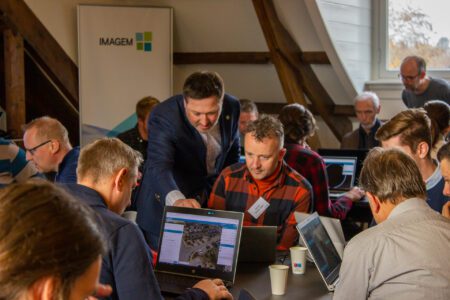
IMAGEM helps to make sense of that complexity. By combining domain expertise with data and smart technology, we provide clarity and direction for decision-making.
Curious to see how that approach works in practice?
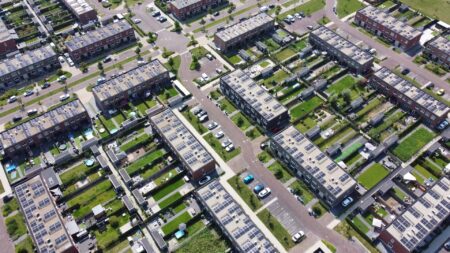
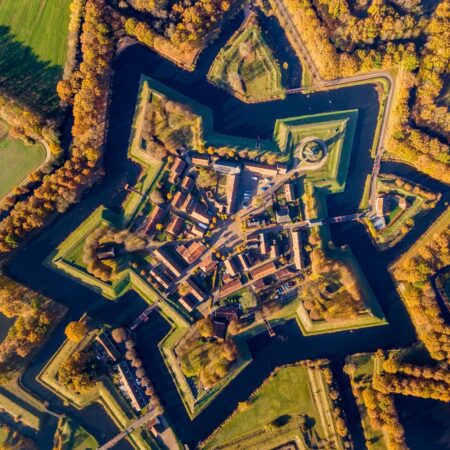
Our solutions
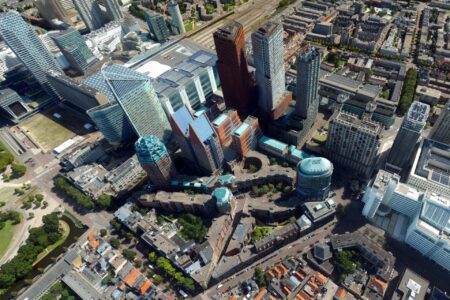

More than just a replica of the physical world
Making decisions based solely on the current situation is often not enough. You would not only want to see what the situation looks like, but also to understand what is possible and what the implications of different choices are. With a digital twin, you get a realistic and up-to-date view of the physical environment, where you can explore scenarios, test plans, and immediately see the effects. This provides insight that goes beyond mere visualization, allowing you to make decisions faster, more effectively, and more cost-efficiently.
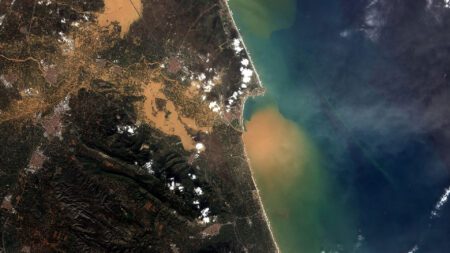

Make better decisions with data from up above
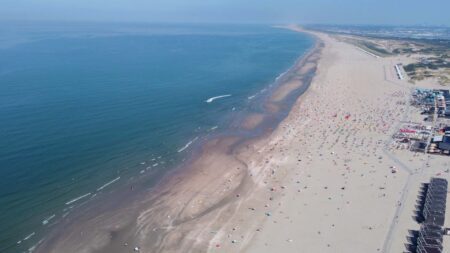
Remote sensing provides fast and accurate insights into the real world without having to physically visit the area. Using satellites, drones, aircraft, and sensor networks, we collect data using sensors such as optical, thermal, radar, and LiDAR. This information is combined with open data, computational models, and AI, and analyzed to support decision-making. At IMAGEM, we combine this data with our expertise, ensuring you always work with reliable and up-to-date imagery. This allows you to make better-informed decisions regarding urban development, environmental management, permitting, and oversight & enforcement.
Current
All articles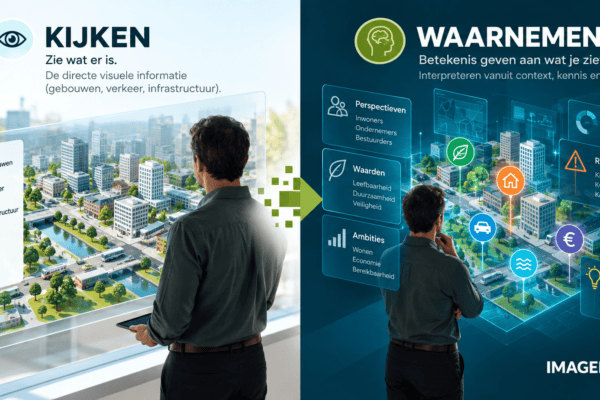
Digital Reality: a " Digital Twin " that incorporates people's perspectives
When it comes to societal challenges, it’s not enough to simply recreate reality digitally. You want to understand what that reality means for the people who live, work, do business, and make decisions within it. And to do that, you have to look beyond the “ Digital Twin.” You need to move toward a “Digital Reality,” one that encompasses not only the physical world but also the human perspective.
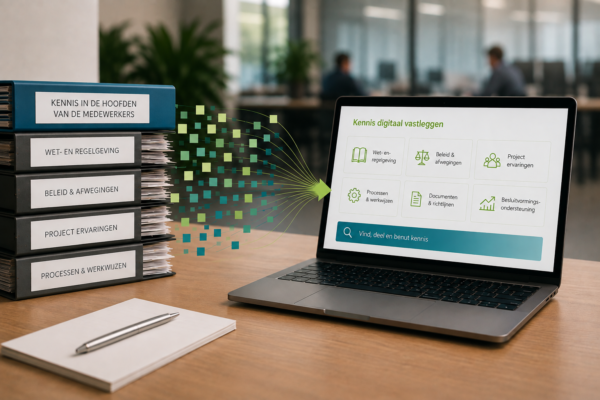
Digital Transformation in Government, Part 1: Preserving and Utilizing Knowledge
Knowledge preservation is about retaining and immediately applying valuable knowledge for work and decision-making. By systematically documenting, linking, and making knowledge accessible, a shared information base is created that helps facilitate faster and better-informed decisions. In this way, knowledge preservation forms an important foundation for digital transformation.
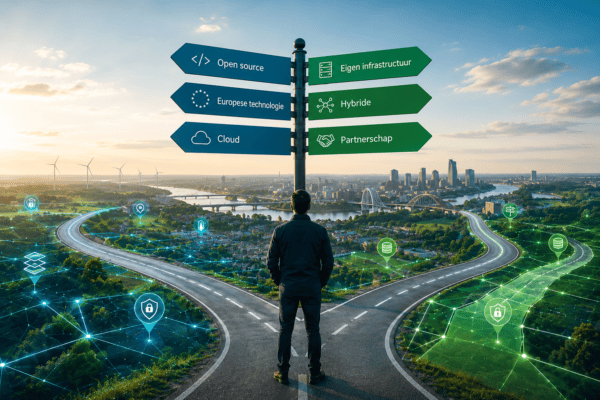
Digital sovereignty begins with the freedom to choose
Digital sovereignty is about the freedom to continue making your own choices regarding data, technology, and infrastructure. By identifying dependencies, diversifying risks, and having alternatives and an exit strategy in place, organizations maintain control. IMAGEM is happy to collaborate with organizations for which autonomy, data security, and continuity are essential.
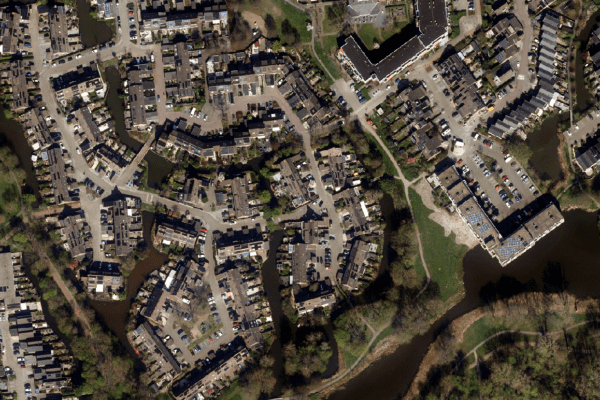
Remote sensing 5: From Data to Dashboard in Capelle aan den IJssel
Before we can visualize anything in a digital twin, we first need to understand what we’re actually looking at. Without that foundation, visualizations are nothing more than pretty pictures. In part four of the series, Harald takes a step back to the beginning: observation itself. Not just via satellites or drones, but also with our own eyes. Remote sensing with observation—knowing who is looking, why, and with what instrument. Only then can you combine data into information that is accurate, meaningful, and usable.
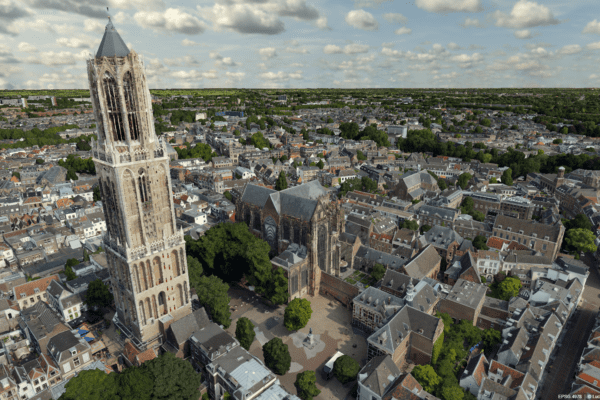

From drone data to actionable 3D insights
Fast and reliable information makes all the difference when it counts. Yet in practice, drone data often remains scattered across individual images, separate software steps, and fragmented workflows. IMAGEM and Skyline are changing that. Through an equal partnership, we combine data collection, 3D processing, centralized data management, and visualization into a single integrated workflow.
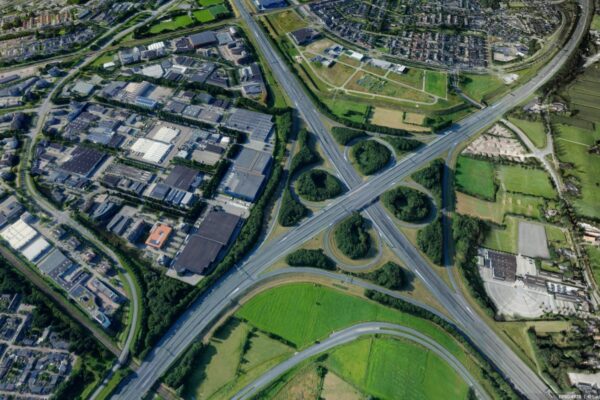
A digital twin for all
Policy-making is a complex process due to fragmented data and time-consuming procedures. Digital twins a solution, but require specialized knowledge and technical expertise. IMAGEM technology, expertise, and a practical approach, making digital twins accessible and immediately usable for municipalities.

Two people celebrating anniversaries, one story
This year, two colleagues are celebrating special anniversaries at IMAGEM: Niels van de Graaf, Government Market Manager, has been with us for 10 years, and Syreetha Nuhuway, Operations Specialist and jack-of-all-trades, has been with the company for 5 years. This is a great opportunity to reflect on their work, their growth, and, above all, the people behind these roles.
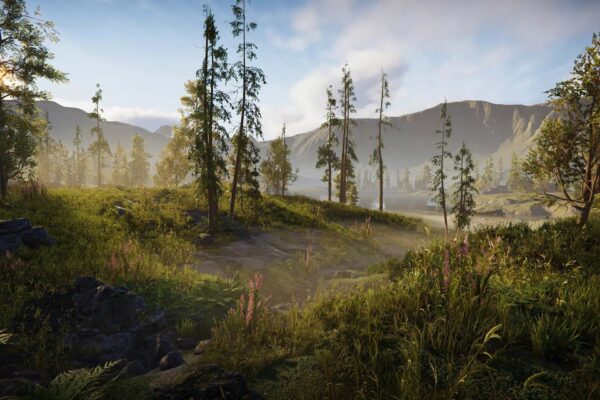
From Games to the Globe: How 3D Engines Are Conquering the World
3D technology is now being used for real-world applications: from smart cities to air traffic control. But how can an engine that was once designed to bring virtual worlds to life suddenly become crucial for large-scale geospatial projects? In this article, we explore the striking differences between geo-engines and game engines. Because when it comes to accuracy, scale, and reliability, a geo-engine like Luciad turns out to operate Luciad a completely different league.
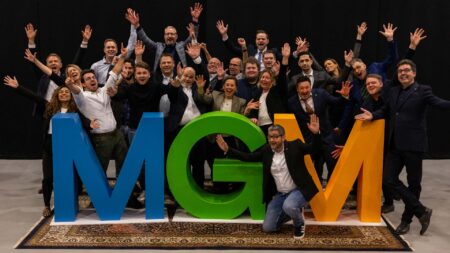
Collaborating on data-driven decision-making
Behind IMAGEM there is a team of passionate specialists who bring forward domain expertise, data, and technology. By combining these elements in a smart way, we translate complex challenges into clear insights and concrete solutions. This enables you to gain greater control, make better decisions, and create a lasting impact on the living environment.